
Modern Pet Mental Health owners no longer see dogs and cats as simple household animals. Across the United States and many other parts of the world, pets are now deeply loved family members. As this emotional bond becomes stronger, awareness about Pet Mental Health continues to grow rapidly. Veterinarians, animal behavior experts, and pet wellness specialists increasingly emphasize that emotional health is just as important as physical health.
Many pet owners notice unusual behaviors when leaving their pets alone. Excessive barking, scratching doors, chewing furniture, hiding, pacing, or refusing food are often signs of emotional distress rather than bad behavior. These reactions usually point toward stress, anxiety, loneliness, or emotional insecurity. Understanding these emotional struggles early can improve a pet’s happiness and create a calmer home environment.
Research into pets and mental health also shows that emotional wellbeing works both ways. Pets reduce human stress, loneliness, and anxiety, while humans provide safety, affection, and companionship for their animals. However, this close attachment can sometimes create emotional dependence. When routines suddenly change or owners spend less time at home, many pets struggle emotionally and develop separation anxiety.
Understanding how pets think, feel, and react emotionally allows owners to build healthier relationships and provide better long-term care.
Understanding Pet Mental Health
Mental health in pets refers to emotional balance, psychological stability, and the ability to cope with daily life comfortably. Just like humans, pets experience fear, stress, sadness, excitement, comfort, and emotional attachment. Their emotional state directly affects behavior, appetite, sleep, learning ability, and overall physical health.
The emotional wellbeing of pets has become a major topic during awareness campaigns such as Mental Health Awareness Month. Veterinarians increasingly encourage owners to monitor emotional behavior alongside regular health checkups. A pet may appear physically healthy while silently struggling emotionally.
Indoor lifestyles, changing routines, long work schedules, and reduced stimulation have all contributed to rising emotional issues in companion animals. Dogs and cats today often spend many hours alone indoors with limited interaction. Over time, this isolation can create boredom, frustration, and anxiety.
Emotionally healthy pets usually display balanced behavior, stable energy levels, healthy sleep patterns, and positive social interaction. In contrast, emotionally distressed pets may become aggressive, destructive, withdrawn, or overly dependent on their owners.
The Deep Emotional Bond Between Humans and Pet Mental Health
The emotional connection between humans and pets is far stronger than many people realize. Dogs especially form strong emotional attachments through daily routines, affection, feeding, exercise, and companionship. Cats, despite their independent reputation, also develop deep trust and emotional dependency on familiar people and environments.
This emotional attachment creates feelings of safety and predictability. Pets depend heavily on routine because routine helps them understand their environment. Feeding schedules, walks, playtime, and owner presence all contribute to emotional security.
When these patterns suddenly change, pets often feel confused and stressed. A new job schedule, moving to another home, divorce, travel, or even changes in sleeping arrangements may trigger anxiety-related behaviors.
Scientific studies continue to show how pets improve emotional wellbeing for humans. Spending time with animals naturally lowers stress hormones and encourages relaxation. Many people feel calmer and emotionally supported after interacting with their pets.
The emotional relationship benefits both sides, but it also means pets may struggle emotionally when they feel isolated or abandoned.
What Is Separation Anxiety in Pets?
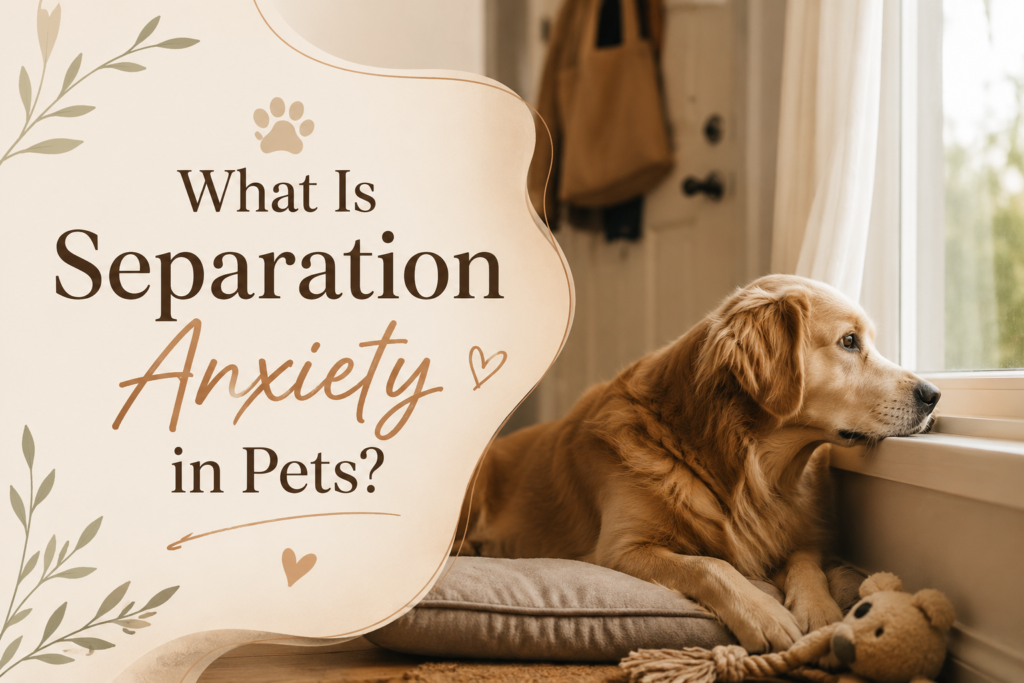
Separation anxiety is one of the most common emotional conditions affecting pets today. It occurs when pets become highly distressed after being separated from their owners or left alone for extended periods.
In dogs, separation anxiety often appears dramatically. Some dogs bark continuously, howl, chew furniture, scratch walls, destroy doors, or urinate indoors when left alone. These behaviors are not acts of revenge or stubbornness. They are panic responses caused by emotional distress.
Cats can also experience separation anxiety, although their symptoms may appear differently. Cats often hide excessively, stop eating, groom themselves obsessively, or become unusually vocal when stressed.
Anxiety affects both the mind and body. Stress hormones increase rapidly during emotional panic, placing the animal in a constant state of alertness. Over time, chronic anxiety may weaken immune health, disrupt digestion, and reduce overall quality of life.
Recognizing the early signs of separation anxiety is essential because untreated anxiety often becomes worse over time.
Common Causes of Separation Anxiety
Several modern lifestyle changes contribute to emotional problems in pets. One major cause is sudden routine disruption. Pets rely heavily on consistency, so unexpected changes can feel emotionally overwhelming.
The rise of remote work created stronger emotional dependence between pets and owners. During periods when owners stayed home constantly, many pets adapted to near-continuous companionship. Later, when work schedules returned to normal, pets struggled emotionally with longer periods of separation.
Rescue animals and adopted pets may also carry emotional trauma from previous experiences. Shelter environments, abandonment, neglect, or unstable living conditions can leave lasting emotional scars that affect trust and confidence.
Other common causes include:
| Cause | Emotional Effect |
|---|---|
| Moving to a new home | Confusion and insecurity |
| Long work hours | Loneliness and stress |
| Sudden schedule changes | Anxiety and instability |
| Lack of exercise | Frustration and restlessness |
| Limited social interaction | Emotional withdrawal |
| Past trauma or abandonment | Fear-based behavior |
Even smaller changes, such as altered feeding times or reduced attention, may trigger emotional discomfort in sensitive pets.
Signs and Symptoms of Pet Anxiety Pet Mental Health
Recognizing anxiety symptoms early can prevent serious behavioral problems later. Emotional distress affects pets in many different ways, and symptoms often vary depending on personality, breed, age, and environment.
Common signs of anxiety in dogs include excessive barking, destructive chewing, pacing, trembling, whining, clinginess, scratching doors, and indoor accidents. Some dogs refuse to eat or sleep properly when stressed.
Cats may display anxiety through hiding, aggression, appetite loss, excessive grooming, or loud vocalization. Many anxious cats also avoid social interaction or suddenly change litter box habits.
Physical symptoms frequently accompany emotional distress. Chronic stress can contribute to digestive issues, weakened immunity, hair loss, sleep disruption, and repetitive behaviors such as licking or tail chasing.
Many owners mistakenly view these behaviors as disobedience. In reality, anxiety-driven behavior usually comes from fear and emotional insecurity rather than intentional misbehavior.
How Routine Changes Affect Emotional Stability
Pets thrive on predictability. Familiar routines create emotional comfort and reduce uncertainty. When routines suddenly shift, pets often feel emotionally unsafe.
Changes in work schedules are one of the biggest triggers for anxiety in modern households. Pets quickly adapt to daily human behavior patterns. If an owner suddenly starts leaving home earlier or spending less time with the pet, emotional confusion may develop.
Travel, vacations, school schedules, visitors, or changes in sleeping arrangements can also affect emotional balance. Some pets adapt easily, while others require weeks to adjust comfortably.
Consistency remains one of the most powerful tools for emotional stability. Pets feel safer when feeding times, walks, play sessions, and bedtime occur regularly.
Creating a predictable environment helps reduce fear and strengthens emotional confidence over time.
The Emotional Impact on Families and Owners Pet Mental Health
Pet anxiety affects more than just animals. It often creates stress throughout the household. Constant barking, damaged furniture, sleep disruption, and indoor accidents may increase frustration for owners and family members.
Financial stress can also become significant. Severe anxiety sometimes leads to expensive veterinary visits, professional training sessions, home repairs, and behavioral therapy costs.
At the same time, emotionally healthy pets contribute greatly to family wellbeing. Calm pets help create peaceful homes, improve emotional connection between family members, and encourage positive daily routines.
Modern workplaces increasingly recognize the relationship between pets and emotional wellness. Many companies now support flexible schedules and pet-friendly environments because emotionally stable home lives often improve employee productivity and mental health.
Effective Ways to Reduce Separation Anxiety Pet Mental Health
Reducing separation anxiety requires patience, consistency, and gradual emotional training. Quick fixes rarely work because emotional recovery takes time.
One of the most effective methods is gradual departure training. Owners should practice leaving for short periods before slowly increasing separation time. This helps pets learn that being alone is temporary and safe.
Daily exercise is also extremely important. Physical activity reduces excess energy, supports emotional regulation, and improves sleep quality. A tired pet usually feels calmer and more relaxed.
Mental stimulation plays an equally important role. Puzzle feeders, training games, scent activities, and interactive toys keep pets mentally engaged during alone time.
Experts also recommend calm departures and arrivals. Emotional goodbyes may unintentionally increase anxiety because pets begin associating departures with stress and tension.
The goal is to teach pets confidence and emotional independence gradually rather than forcing sudden change.
Behavioral Therapy and Professional Support Pet Mental Health
Some pets require professional behavioral support, especially in severe anxiety cases. Certified trainers and animal behaviorists specialize in emotional rehabilitation programs designed to build confidence and reduce panic responses.
Behavioral therapy often focuses on positive reinforcement techniques rather than punishment. Reward-based training helps pets associate alone time with safety and positive experiences.
Veterinarians may also recommend anxiety medication in certain situations. Medication alone rarely solves the underlying emotional problem, but it can reduce panic levels enough for behavioral training to work more effectively.
Professional support may include:
| Professional Service | Purpose |
|---|---|
| Veterinary evaluation | Rule out medical causes |
| Behavioral therapy | Reduce fear responses |
| Positive reinforcement training | Build confidence |
| Telehealth consultations | Ongoing emotional support |
| Medication management | Support severe anxiety cases |
Early intervention usually produces the best long-term results.
Best Products for Managing Pet Anxiety
Technology and pet wellness products now offer additional support for emotional care. Modern pet owners use a wide range of tools to reduce loneliness and provide mental stimulation during alone time.
Smart pet cameras allow owners to monitor pets remotely and sometimes even communicate through two-way audio systems. Automatic treat dispensers reward calm behavior and create positive distractions.
Puzzle feeders and interactive toys encourage problem-solving and reduce boredom. Mental stimulation is extremely valuable because boredom often worsens anxiety-related behavior.
Some pets also respond positively to calming music, weighted blankets, orthopedic calming beds, or pheromone diffusers that mimic comforting natural scents.
Here are some popular anxiety-support tools:
| Product | Main Benefit |
|---|---|
| Puzzle toys | Mental stimulation |
| Smart pet cameras | Remote interaction |
| Automatic feeders | Routine consistency |
| Calming beds | Emotional comfort |
| Pheromone diffusers | Reduced stress |
| Interactive treat dispensers | Positive distraction |
These products work best when combined with training and routine stability.
The Role of Veterinary Telehealth
Veterinary telehealth has transformed access to emotional care for pets. Many families now use online consultations to discuss behavioral problems, anxiety symptoms, and emotional wellness plans without visiting a clinic physically.
Telehealth services are especially useful for busy households and early-stage behavioral concerns. Quick professional advice often prevents minor emotional problems from becoming severe.
Online consultations allow veterinarians and behavior specialists to observe pets in their normal home environment, which sometimes provides more accurate behavioral insight than clinic visits.
Digital tools, video consultations, and mobile tracking apps continue improving emotional wellness care for pets worldwide.
Creating a Healthy Emotional Routine Pet Mental Health
Healthy emotional routines support both mental and physical wellness. Pets feel safer when daily life follows a stable pattern.
Regular feeding schedules, exercise, rest periods, and social interaction help reduce emotional uncertainty. Quiet resting areas also provide comfort during alone time.
Interactive play strengthens trust between pets and owners while improving emotional engagement. Even short daily play sessions can significantly improve mood and confidence.
Healthy emotional routines often include:
- Consistent feeding schedules
- Daily physical exercise
- Mental stimulation activities
- Quiet sleeping spaces
- Predictable alone-time practice
- Positive social interaction
Simple daily consistency often creates dramatic emotional improvements over time.
Common Mistakes Pet Mental Health Owners Should Avoid
Many well-meaning owners unintentionally worsen anxiety-related behavior. One of the biggest mistakes is punishment. Scolding anxious pets usually increases fear and damages emotional trust.
Ignoring early symptoms is another common problem. Mild clinginess, pacing, or whining may gradually develop into severe anxiety if untreated.
Overdependence can also create emotional imbalance. Constant attention sometimes prevents pets from learning healthy independence and emotional coping skills.
Every pet has a unique personality and emotional sensitivity. What works for one animal may not work for another. Personalized care and observation are essential for successful emotional support.

When to Seek Veterinary Help Pet Mental Health
Professional help becomes necessary when anxiety symptoms persist or worsen despite training efforts. Continuous barking, aggression, self-harm behaviors, appetite loss, or destructive panic reactions often indicate severe emotional distress.
Medical conditions sometimes mimic anxiety symptoms. Pain, neurological disorders, digestive issues, and thyroid problems may cause behavioral changes that resemble emotional instability.
A veterinarian can rule out physical illness while recommending appropriate behavioral treatment options.
Early intervention remains one of the most important factors in successful recovery.
Future Trends in Pet Mental Health
The future of pet mental health care continues evolving rapidly. Artificial intelligence, emotional monitoring systems, wearable trackers, and advanced behavioral analytics are becoming more common in the pet wellness industry.
Future technologies may help owners detect emotional changes before symptoms become severe. Personalized nutrition plans, natural calming therapies, and advanced behavioral programs are also gaining popularity.
Businesses increasingly recognize the value of pet-friendly lifestyles and emotional wellness support. As awareness grows, preventive emotional care will likely become a standard part of modern veterinary medicine.
The focus is gradually shifting from simply treating behavioral problems to preventing emotional distress before it develops.
Conclusion Pet Mental Health
Supporting pet mental health requires patience, consistency, understanding, and emotional awareness. Pet Mental Health experience fear, stress, loneliness, comfort, and emotional attachment in ways that deeply affect their daily lives.
Separation anxiety has become increasingly common in modern households, especially as routines and lifestyles continue changing. However, with proper support, training, and emotional care, most pets can learn to feel calmer, safer, and more emotionally secure.
Emotionally Pet Mental Health contribute to happier homes, stronger human-animal relationships, and better overall family wellbeing. Small daily habits such as routine consistency, exercise, mental stimulation, and compassionate interaction can make a major difference in a pet’s emotional life.
As awareness continues growing, more families now understand that caring for a pet means supporting both physical health and emotional wellness. When owners respond with empathy, structure, and proper guidance, pets live healthier, happier, and more emotionally balanced lives.